From the Cleveland Clinic NewsRoom
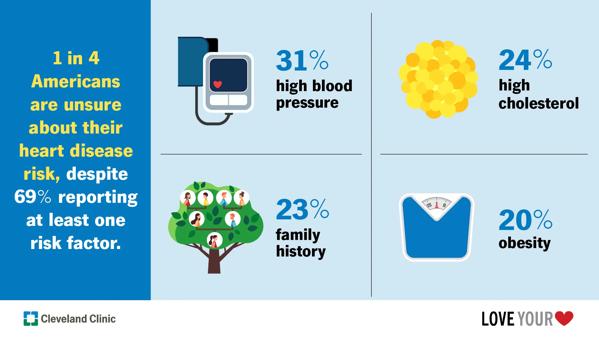
Nearly 1 in 4 Americans aren’t sure if they’re at increased risk for heart disease, despite 69% having at least one risk factor.
As interest in longevity and healthy aging continues to grow, a new national survey from Cleveland Clinic reveals a gap between confidence and awareness when it comes to heart health.
According to the 2026 report, nearly 1 in 4 Americans (24%) aren’t sure whether they are at increased risk for heart disease, even though 69% report at least one known risk factor including:
- High blood pressure (31%)
- High cholesterol (24%)
- Family history (23%)
- Obesity (20%)
- Poor diet (18%)
- Sedentary Lifestyle (17%)
- Daily unmanaged stress (16%)
- Sleep apnea (15%)
- Smoking (14%)
- Diabetes (13%)
“Healthy aging is about prevention,” said Samir Kapadia, M.D., chair of cardiovascular medicine at Cleveland Clinic. “Heart disease often develops silently over decades, which is why staying active, understanding your risk factors, and addressing them early can make a profound difference in both quality of life and longevity.”
The survey shows Americans see longevity as achievable through everyday behaviors, not expensive treatments or cutting-edge technology. When asked what longevity means to them, respondents prioritized:
- Staying physically active and mobile as they age (62%)
- Maintaining cognitive health and mental sharpness (56%)
- Preserving independence and quality of life (56%)
Only 5% associated longevity with expensive or elite medical treatments, and just 6% viewed it as something reserved for celebrities or the wealthy.
While 7 in 10 Americans (70%) believe the heart is in peak condition in a person’s 20s or 30s, nearly everyone (95%) agrees there are steps people can take at any stage of life to improve longevity and reduce heart disease risk.
Exercise (41%) and eating a balanced diet (25%) were selected among the top two most effective ways to protect heart health, followed by maintaining a healthy weight (23%), getting regular checkups (20%), and managing stress (20%).
Even as many Americans report rising stress (33%), less sleep (29%) and weight gain (29%) over the past decade, the majority are making meaningful health improvements. Most Americans (84%) say they’ve made at least one positive change, including:
- Eating healthier (40%)
- Being more conscious of health numbers (36%)
- Exercising more (27%)
- Improving sleep (25%)